











Hainan Village Wins Global Sustainable Architecture Award
HIMC2026-11-23 21:50:27
The Global Award for Sustainable Architecture ceremony was recently held in Istanbul, Türkiye. Presented jointly by UNESCO and the International Union of Architects (UIA), the award named the conservation and revitalization project in Naya Village, Yongfa Town, Chengmai County, Hainan, one of this year’s five winners worldwide. It is the first time a traditional village conservation project from Hainan has received the award.
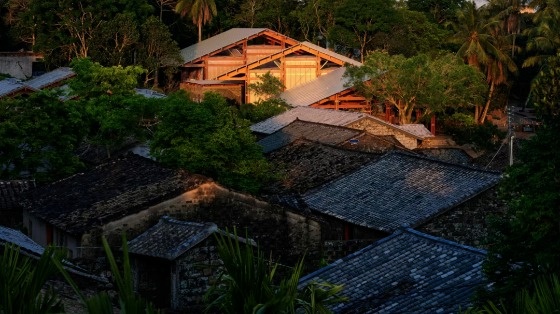
Naya is a village built on the Leiqiong volcanic rift valley with a history spanning more than 400 years. After their ancestors migrated from Fujian to Hainan, villagers built homes from volcanic rock and cultivated the fertile farmland of northern Hainan. Over the centuries, the settlement developed a distinctive tropical farming landscape, marked by volcanic stone walls and traditional "ten-pillar houses" supported by jackfruit timber. Urbanization, however, brought challenges: younger residents left, homes were abandoned and fell into disrepair, and infrastructure aged. The village faced a difficult choice between preserving its heritage as a static museum or allowing extensive commercialization.
The revitalization project has focused on preserving the village's original layout, making only necessary improvements to its historic buildings, and minimizing environmental impact. The team began by surveying and documenting every volcanic stone house and its timber components. Structurally sound houses retained their original layouts, while their interiors were upgraded with modern smart facilities so longtime residents could continue living there. In severely damaged buildings at risk of collapse, modular prefabricated timber frames were added within the existing volcanic stone walls to provide new structural support. Gaps between the old and new structures bring in natural light and ventilation, and native plants have been incorporated into the design. This approach restores structural safety and modern living standards without compromising the village's historic character.
The project also restored the village's traditional waterways, reconnecting forests, lanes, wells, ponds, and farmland to improve natural stormwater management. More than 120 native plant species were incorporated into the landscaping, transforming the village into an open-air tropical botanical garden.
To protect residents' interests, town and village authorities held several rounds of consultations and agreed to leave property ownership unchanged. The project relies on leasing and cooperative management, with revenue from guesthouses, educational tourism, and cultural and creative product businesses shared among residents, the village collective, and the operating team in agreed proportions. This approach helps preserve the local community and its social fabric while creating new economic opportunities.
Today, Naya Village is home not only to original residents but also to newcomers who are helping revitalize it. Once primarily an agricultural settlement, it now also offers spaces for extended stays, creative pursuits, and international artist residencies. The project shows how Hainan's traditional village conservation practices can align with international sustainability standards while introducing the island's rural heritage to a wider global audience.
作者: Translator: David Janke
责任编辑: 商赢兮
南海网版权声明:以上内容由南海网原创生产,未经书面许可,任何单位及个人不得以任何方式或理由对上述内容的任何部分进行使用、复制、修改、抄录、传播或与其它产品捆绑使用、销售。如需转载,请与南海网联系授权,凡侵犯本公司版权等知识产权的,本公司必依法追究其法律责任。电子邮箱:nhwglzx@163.com.