











Danzhou Bay selected as one of China's 2026 model cases for marine ecological conservation and restoration
HIMC2026-11-18 11:30:41
Lush mangroves stretch along Danzhou Bay, where flocks of migratory birds forage among the mangrove forests and tidal flats, while fiddler crabs and shellfish thrive beneath the trees. During a field visit on November 11 to learn about marine ecological conservation and restoration efforts in the area, reporters observed a vibrant coastal wetland attracting growing numbers of tourists and birdwatching enthusiasts.
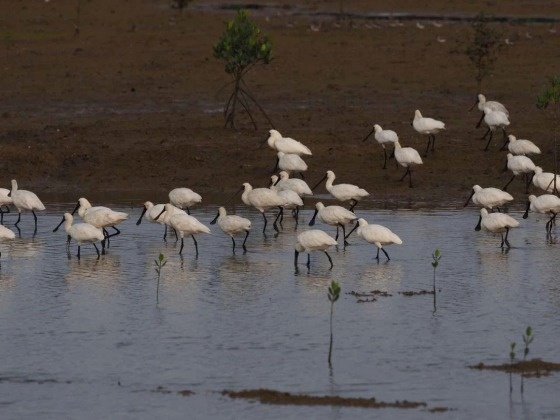
A flock of black-faced spoonbills forages in the wetland. Photo by Peng Qinglin, Hainan Daily Media Group, and correspondent Yin Jianjun.
Recently, the Ministry of Natural Resources announced 13 model cases of marine ecological conservation and restoration for 2026. The Danzhou Bay marine ecological conservation and restoration project in Danzhou, Hainan, was among those selected, making it the only case from Hainan Province. According to the selection criteria, Danzhou launched wetland ecosystem conservation and Blue Bay improvement initiatives, with mangrove restoration as a key focus. The efforts aim to achieve the marine ecological vision of "clear waters, green shores, clean beaches, beautiful bays and green islands." The project was recognized as an example of harmonious coexistence between humans and nature, while offering a replicable model of community-based governance for ecological conservation in the Hainan Free Trade Port.
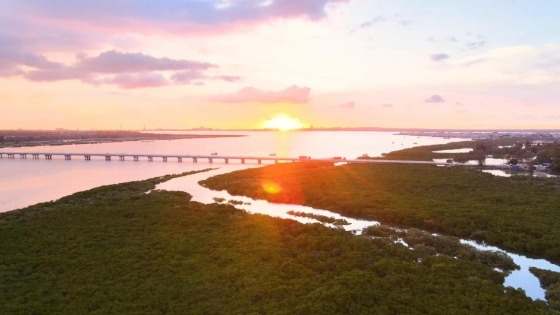
Restored mangrove communities at the river estuary near Chunma Bridge in Danzhou Bay. Photo by Peng Qinglin, Hainan Daily Media Group, and correspondent Yin Jianjun.
In recent years, Danzhou has implemented a series of ecological improvement and restoration projects, including pest control, coastal and tidal-flat habitat restoration, the conversion of aquaculture ponds back into mangrove forests, and coastal pollution management. These efforts have restored approximately 19,500 mu (about 1,300 hectares) of wetlands and 270 hectares of mangroves. Through micro-topography reconstruction and the restoration of salt-field embankments, the city has created an 859.5-mu (57.3-hectare) refuge for birds. It has also cleared 725 mu (48.3 hectares) of aquaculture tidal flats and removed 418 mu (27.9 hectares) of river-mouth embankments. Efforts to control invasive species, including Derris trifoliata and smooth cordgrass (Spartina alterniflora), have freed up an area equivalent to 100 football fields for mangrove regeneration. Around 300 metric tons of marine litter have been collected, while five constructed wetlands have been established to improve the quality of aquaculture wastewater. The city has also converted 4,025 mu (268 hectares) of fishponds back into mangrove forests, creating a 3.2-kilometer ecological coastline. Three years after planting, the survival rate of mangroves reached 92%.
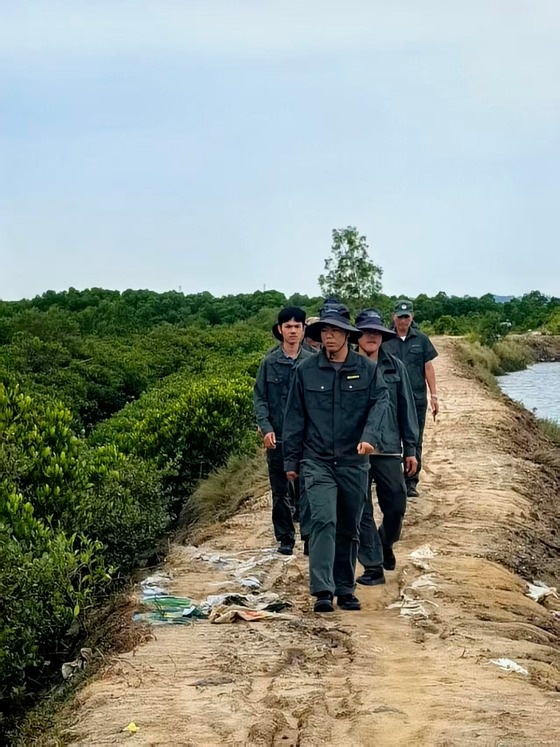
Rangers patrol the mangroves at the Xinying Bay Mangrove Nature Reserve in Danzhou. Photo by Peng Qinglin, Hainan Daily Media Group, and correspondent Yin Jianjun.
Chen Zhengping, a forest ranger at the Xinying Bay Mangrove Nature Reserve and head of the Danzhou Bay Wetland Bird Protection Team, said the area had previously suffered from the impacts of aquaculture enclosures, invasive species and overfishing. Large stretches of mangroves had withered and disappeared, while coastal wetland habitats had been damaged.
With the gradual implementation of ecological restoration projects, local residents have become increasingly aware of the importance of environmental protection. Mangrove forests have begun to flourish again, attracting rare migratory birds such as black-faced spoonbills and spoon-billed sandpipers, which return each year to spend the winter. Tourism, birdwatching and educational field trips have also increased, with educational groups alone bringing an average of 12,000 visitors annually.
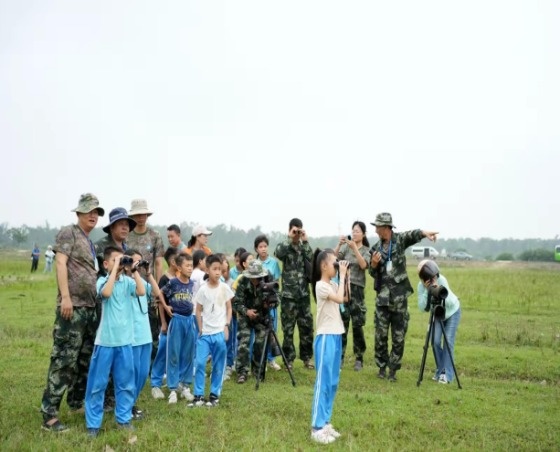
Bird conservation education activities are brought into classrooms in Danzhou Bay. Photo provided by the Danzhou Municipal Bureau of Natural Resources and Planning.
Following the restoration work, the mangrove area in Danzhou Bay has reached 1,016 hectares, while the number of mangrove species has increased from 18 to 22, accounting for 57.9% of all mangrove species found nationwide. Concentrations of nitrogen and phosphorus pollutants in seawater have fallen by more than one-third, while the diversity of benthic organisms inhabiting the tidal flats has nearly tripled. Monitoring has recorded 42 bird species in the area, with the total migratory bird population exceeding 70,000.
作者: Translator: Eva Molaro
责任编辑: 商赢兮
南海网版权声明:以上内容由南海网原创生产,未经书面许可,任何单位及个人不得以任何方式或理由对上述内容的任何部分进行使用、复制、修改、抄录、传播或与其它产品捆绑使用、销售。如需转载,请与南海网联系授权,凡侵犯本公司版权等知识产权的,本公司必依法追究其法律责任。电子邮箱:nhwglzx@163.com.