











Two Hainan Classmates Behind China's Latest Global Gaming Sensation
HICN2026-11-09 22:29:16
On November 2, S-Game, the Chinese developer of the wuxia (Chinese martial arts) action role-playing game Phantom Blade Zero, announced that it had sold more than four million copies of the title across all platforms within 72 hours of its release. Based on the game's lowest retail price, industry estimates put its gross sales revenue at more than CNY 1 billion.
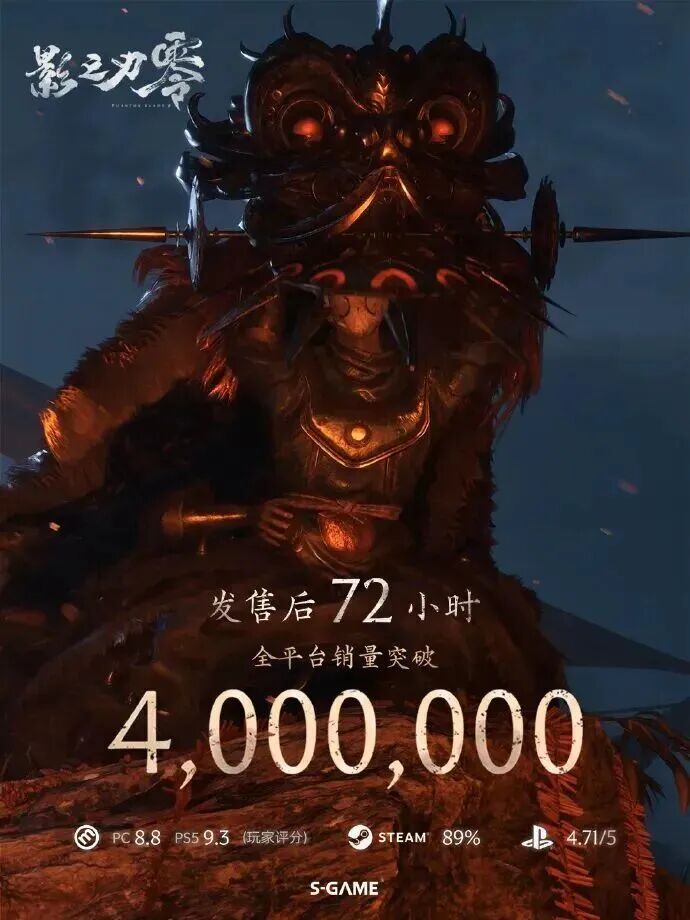
Congratulating this success, renowned wuxia actor Donnie Yen, who served as a creative consultant and portrayed the character Mo Yuan, expressed his hope that players around the world would experience the power, aesthetics, and philosophy of Chinese kung fu through the game.
A Chinese-made triple-A wuxia action-adventure title that has already won a place among the world's top-selling games — Phantom Blade Zero is making its mark on the global gaming scene.
But as the game captures international attention, another story is unfolding far from the spotlight.
In a WeChat group for the Class of 2003, Science Class 1—a class specializing in science subjects under China's high-school arts-and-sciences stream—at Hainan Middle School in Haikou City, the excitement has been impossible to contain.
"Over the past few days, our class group chat has been buzzing," said Chen Hui, who served as the class's homeroom teacher. He spoke with unmistakable pride about his former students' latest achievements.
And what's behind the buzz? Two names:
Liang Qiwei, founder and CEO of Beijing-based game developer S-Game.
Yang Tingmu, who serves as the game's cutscene animation director.
Both were students in Chen's class.
"Liang Qiwei was an all-rounder," Chen recalled. He had been Liang's homeroom teacher and chemistry teacher since the first year of high school. He remembers Liang as a thoughtful student who spoke deliberately and had a knack for getting straight to the heart of a problem. He also loved drawing and writing.
"Even back then, we (teachers) often said he had an artistic flair."
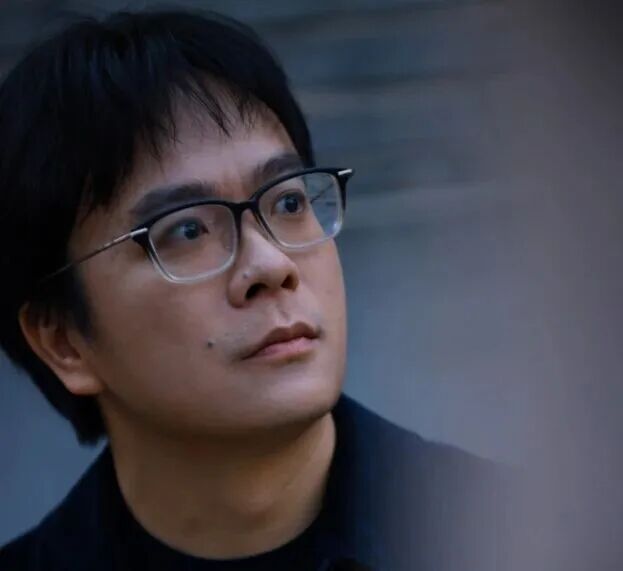
Liang Qiwei, in a recent photograph.
He also excelled in computer studies. Working with his classmate Liu Cailiang, Liang won first prize in the inaugural National Primary and Secondary School Computer Production Competition.
"He was hardworking and highly disciplined. His interests in drawing and writing never came at the expense of his academic studies," Chen said.
After graduating from high school in 2003, Liang was admitted to Tsinghua University, where he studied architecture. He later pursued further studies at Yale.
In 2015, for the 92nd anniversary of Hainan Middle School's founding, Chen invited Liang back to speak to current students.
By then, Liang had returned to China and established his own game development studio in Beijing. It had already released several mobile games, earning him and his team considerable recognition.
Liang's Chinese teacher, Lan Zhijun, remembered him particularly well for two things: his strong performance in the subject and his love of drawing comics.
His extracurricular essays often featured reviews and reflections on wuxia novels.
"Liang was especially fond of the works of Gu Long. He also wrote quite a few martial arts stories himself, and many of our classmates read them," said Meng Yujing, who attended both Hainan Middle School and Tsinghua University with Liang.
Gu Long (1938–1985), the pen name of novelist Xiong Yaohua, was one of the most influential writers of modern Chinese wuxia fiction, who helped shape a genre that has inspired generations of readers.
"Looking back at his games today, I can see that the imagery and ideas from those literary works have been carried forward and developed in them."
Meng also recalled that Liang and Yang had already begun collaborating in high school.
"They worked together on our class's school carnival activities, hand-drawing posters and designing performances. They were remarkably talented."
"Students were responsible for planning, designing and carrying out the carnival activities themselves. Teachers only provided funding and helped manage risks," Meng said. "It gave us considerable room to grow."
From drawing classroom posters to creating games together
Yang Tingmu's career has taken an equally unconventional path.
He graduated from Renmin University of China with a degree in land resource management before switching disciplines and gaining admission to the Beijing Film Academy, where he specialized in animation.
Today, he is an acclaimed animation director and founder of Fantasy Animator Studio. He previously served as director and animation supervisor for Unfinished, the ending cinematic of Black Myth: Wukong.
"We've both always loved animation and comics. We started working together back in high school, drawing classroom bulletin boards," Yang recalled.
When Liang returned from the United States in 2011, the two quickly reconnected.
Their professional collaboration began with the mobile game Phantom Blade 2. Yang subsequently contributed to Phantom Blade 3, Phantom Blade Zero, and several other productions by S-Game.
"I run Fantasy Animator Studio, my own animation set-up. In addition to S-Game, we also collaborate with other companies, including miHoYo and NetEase," Yang said.
"Some of my collaborations with Liang are through our respective companies, while others involve my direct participation as a key member of the creative team. For Phantom Blade Zero, for example, I serve as the cutscene animation director for the entire game."
The Boy who filled 40 or 50 sketchbooks
Long before he became a game developer, Liang Qiwei was already building imaginary worlds on paper.
"From a very young age, I loved making up stories and drawing. I would first develop a story outline, then draw the characters, settings, and props that belonged to it. Even in my final year of high school, I managed to fill an entire sketchbook," Liang once recalled.
From the age of seven or eight through his twenties, he created an estimated 40 to 50 such illustrated books.
After Liang's mother retired, she gathered his childhood drawings, had them bound into books, and kept them as treasured mementos.
On October 31, 2015, Liang returned to Hainan Middle School for its anniversary celebrations. In a speech titled "Never Forget Why You Started," he shared his journey from student to entrepreneur and encouraged younger students to develop their strengths and pursue their dreams.

Liang Qiwei delivering a speech at his alma mater, Hainan Middle School, on October 31, 2015.
During his speech, Liang recalled a turning point in his third year at Tsinghua University.
He came across a piece of software that opened up an entirely new world for him. For the first time, he realized that the drawings he had created with his own hands could be brought to life and that he could interact with other gaming enthusiasts through his creations.
Excited by the possibilities, he overcame numerous obstacles and taught himself screenwriting and graphics programming, eventually developing his first original game title: Rainblood.
Initially, he simply enjoyed the creative process and uploaded the game online to share his accomplishment. He never expected the response it would receive; downloads exceeded 400,000 on its first day and eventually reached five million.
In 2008, Liang graduated from Tsinghua University's Department of Architecture, where his graduation thesis was recognized as outstanding. That same year, he travelled to the United States to pursue a master's degree in design at Yale University's School of Architecture.
While studying in the United States, he decided to take a chance and translate Rainblood, the game he had developed as an undergraduate, into English.
The English version sold 50,000 copies. With a profit of US$1 per copy, he earned a total of US$50,000.
After graduating from Yale in 2011, Liang turned down a well-paid position as an architect and returned to China to pursue his entrepreneurial ambitions.
His work attracted the attention of prominent angel investor Xu Xiaoping. With his backing, Liang established the Soulframe Studio—the precursor to S-Game—in Beijing and embarked on a professional career in game development.
Reflecting on his entrepreneurial journey during his return to Hainan Middle School, Liang offered a simple observation:
"The most sophisticated products are born from the combination of science and art."
Reason and madness
Creating a game on the scale of Phantom Blade Zero requires more than technical expertise and meticulous planning. It also demands a willingness to take creative risks.
On October 28, just days before the game's release, Liang published an essay titled "Reason and Madness," reflecting on the creative decisions and challenges behind the project.
"The research and development process is not always a rational one. Those emotional and even seemingly crazy elements may well be what make a game truly special," he wrote.
"Over the past few years, one thing I've often repeated to the team is: 'Today, I've made a decision that will leave everyone scrambling.'"
Such announcements often meant dismantling and rebuilding work that the team had already thoroughly completed—sometimes abandoning it altogether.
"We scrapped other projects that were under development, continually expanded the scope of production and raised the level of detail in the game. We devoted every resource we could muster, bringing together technology, experience, expertise and support from different quarters."
The production involved thousands of hours of motion capture and extensive 3D scanning across towns and villages throughout China.
The team also sought guidance from masters of traditional Chinese performing arts and martial arts: Guangdong lion dance masters provided instruction in lion dance performances, Emei swordsmanship masters advised on sword techniques, and Shaolin monks helped with the game's depiction of traditional boxing techniques.
Liang also described the development of an efficient, professional martial arts motion-capture team.
Led by action director Yang Liu, with Donnie Yen serving as a consultant, the team created an extensive repertoire of movements for the game, covering attacks, defence, dodging, combo sequences and finishing moves.
At noon CST on November 2, Liang shared a post on his WeChat Moments announcing that Phantom Blade Zero had sold more than four million copies across all platforms within 72 hours.
He accompanied it with a short but confident message:
"Master Soul, our game has only just begun."
In the game, the protagonist, known as Soul, possesses extraordinary combat skills.
Beyond the game, the man who created him, Liang Qiwei, is perhaps no less extraordinary.
作者: hicn
责任编辑: 魏君帆
南海网版权声明:以上内容由南海网原创生产,未经书面许可,任何单位及个人不得以任何方式或理由对上述内容的任何部分进行使用、复制、修改、抄录、传播或与其它产品捆绑使用、销售。如需转载,请与南海网联系授权,凡侵犯本公司版权等知识产权的,本公司必依法追究其法律责任。电子邮箱:nhwglzx@163.com.