











38 Blue-and-White Pieces Fired in Chengmai Celebrate the History of Hainan Ceramics
HIMC2026-09-27 22:05:19
On September 26, the kiln at the Hongkanling Ceramics Park in Qiaotou Town, Chengmai County, Hainan Province, was fired up once again. The occasion was a special “Chengmai Blue-and-White” experience created for the Mid-Autumn Festival, in which visitors painted blue-and-white designs by hand onto unfinished pieces before they were glazed and fired, adding a handmade touch to the festival celebrations.
The latest trial firing of Chengmai blue-and-white porcelain in the style of the Ming and Qing dynasties also yielded promising results. A total of 38 imitation antique blue-and-white pieces were successfully fired, including cups, bowls, plates and incense burners, marking new progress in efforts to revive Chengmai’s traditional blue-and-white porcelain.
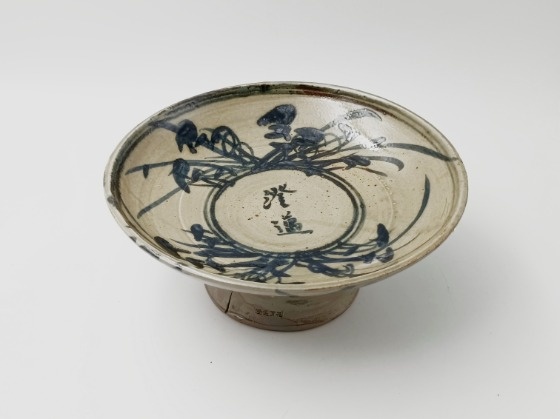
An imitation Ming- and Qing-Dynasty Chengmai blue-and-white stemmed plate made at Hongkanling Ceramics Park.
“Many people do not know that Hainan itself once had a thriving tradition of producing blue-and-white porcelain,” said Hu Yaqiang, head of the rural revitalization team in Qiaotou Town. Archaeological excavations have shown that during the Ming and Qing dynasties, ancient kilns at several sites along the Nandu River produced blue-and-white porcelain on a large scale. Chengmai blue-and-white porcelain represents a high level of local ceramic craftsmanship and bears witness to the history of ceramic production, culture and trade along the South China Sea section of the Maritime Silk Road.
Chengmai blue-and-white porcelain was made mainly from kaolin and volcanic clay found in the mountainous areas along the Nandu River. Coral, seashells, fish bones and coconut shells were calcined and added to the glaze, giving it a grayish-yellow or grayish-green hue. The blue pigment was refined by calcining locally sourced cobalt ore known as “wanhua,” which has a high manganese and low iron content and produces a deep, dark blue color. The blue-and-white designs were characterized by bold, free-flowing brushwork, with motifs including flowers and plants, trees and rocks, auspicious clouds, geometric patterns, auspicious characters and maker’s marks. Among them, the “shou” character-and-floral mark, coconut tree and orchid motifs are particularly distinctive of the local style.
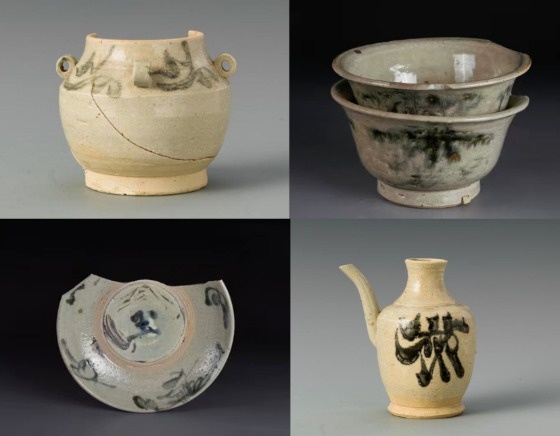
Fragments of blue-and-white porcelain unearthed from the Fu'an Kiln.
The 38 blue-and-white pieces fired this time represent an important step in the research and restoration of Chengmai blue-and-white porcelain.
According to Professor Su Xiya of Hainan University, the research team used ancient porcelain fragments in the collection of the Chengmai County Museum as references. The team conducted field surveys along the Nandu River, selected locally sourced raw clay, and repeatedly adjusted glazes made from natural plant ash. After dozens of formula revisions and multiple rounds of high-temperature test firings, the team gradually overcame the technical challenges involved in the process.
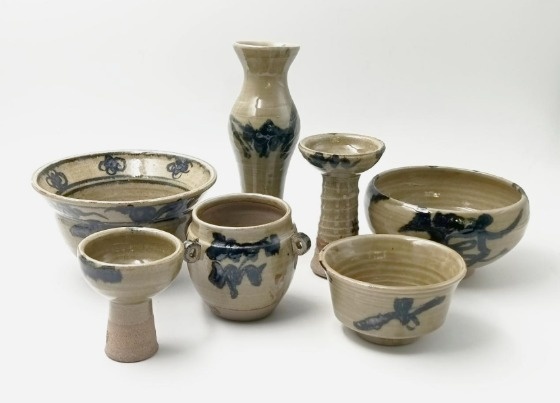
Imitation Ming- and Qing-Dynasty Chengmai blue-and-white porcelain made at the Hongkanling Ceramics Park.
“The pieces not only closely reproduce the appearance of ancient porcelain, but also retain the elegant, warm and lively traditional character of Chengmai blue-and-white,” Su said.
Professor Wu Baiyu, the project's lead expert, said Chengmai blue-and-white porcelain represents the wisdom born from cultural exchange and innovation among the various ethnic groups of ancient Hainan.
Its cultural value, he said, lies in enriching the heritage of Chinese blue-and-white porcelain; its artistic value lies in showcasing the simple, natural character of Hainan's island culture; and its industrial value lies in opening up a new path for Chengmai County by turning its historical and cultural heritage into a modern industry.
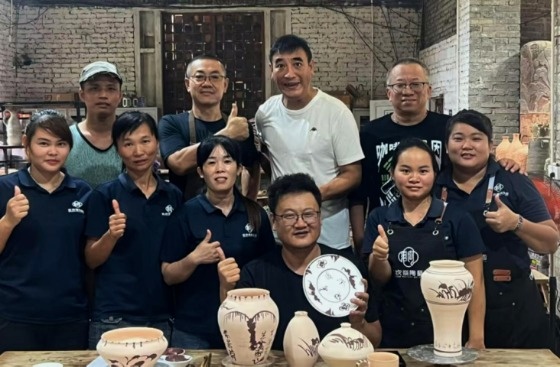
Members of the project team working at the Hongkanling Ceramics Park in Qiaotou Town.
“The restoration of Chengmai blue-and-white porcelain is not merely about reviving a craft. It is also about reconnecting the threads of Hainan's ceramic heritage,” said Cui Yanghe, head of Hongkanling Ceramics Park. “It means that Hainan has not only memories of export porcelain from the Maritime Silk Road, but also the everyday legacy of its own local folk kilns.”
Next, the park will further incorporate elements of island culture, Dongpo culture and farming culture into the development of contemporary cultural and creative products featuring Chengmai blue-and-white porcelain, Cui said.
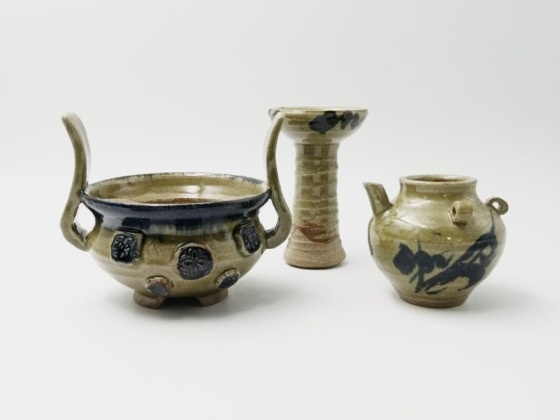
Imitation Ming- and Qing-Dynasty Chengmai blue-and-white porcelain made at Hongkanling Ceramics Park.
As visitors' hand-painted unglazed pieces sat alongside the research team's imitation antique blue-and-white pieces inside the kiln, the flames that once burned at the Fu'an Kiln hundreds of years ago were, during this year's Mid-Autumn Festival, brought together with the memories of ordinary people's own handmade creations.
Those involved in the firing included ceramic artists and practitioners from Beijing, Hainan, Yunnan and other parts of China, including Shi Longpeng, Deng Haisheng, Li Bo, Wu Xiaorong, Li Haiyun, Wang Ping, Wang Haihua and Xu Jingju.
作者: Eva Molaro
责任编辑: 蔡蓉
南海网版权声明:以上内容由南海网原创生产,未经书面许可,任何单位及个人不得以任何方式或理由对上述内容的任何部分进行使用、复制、修改、抄录、传播或与其它产品捆绑使用、销售。如需转载,请与南海网联系授权,凡侵犯本公司版权等知识产权的,本公司必依法追究其法律责任。电子邮箱:nhwglzx@163.com.