











Hainan's Wintering Waterbirds Top 40,000 as Rare Bird Numbers Hit New Highs
HIMC2026-09-22 17:00:13
As of March 30, Hainan's 2026 synchronized survey of wintering waterbirds had recorded 77 species, with the total count exceeding 40,000 for the first time. Both the number of species and the number of birds reached record highs.
Hainan lies midway along the East Asian–Australasian Flyway (EAAF), making it an important stopover and wintering site for migratory birds heading south. Birds begin arriving along the flyway in September each year, with southward migration peaking in mid- to late December. They return north the following March. Hainan's warm climate and varied habitats, including mangroves, rivers, and tidal flats, provide places for migratory birds to feed and rest.
The first arrivals from the north were spotted in September. At Baishamen Park in Haikou, a birdwatcher sighted a brown-breasted flycatcher, a species protected in China for its ecological, scientific, or social value. Hainan Dongzhai Port National Nature Reserve recorded Pacific golden-plovers, whimbrels, and cattle egrets, among other species. The collared kingfisher was also recorded on Beigang Island for the first time in several months.
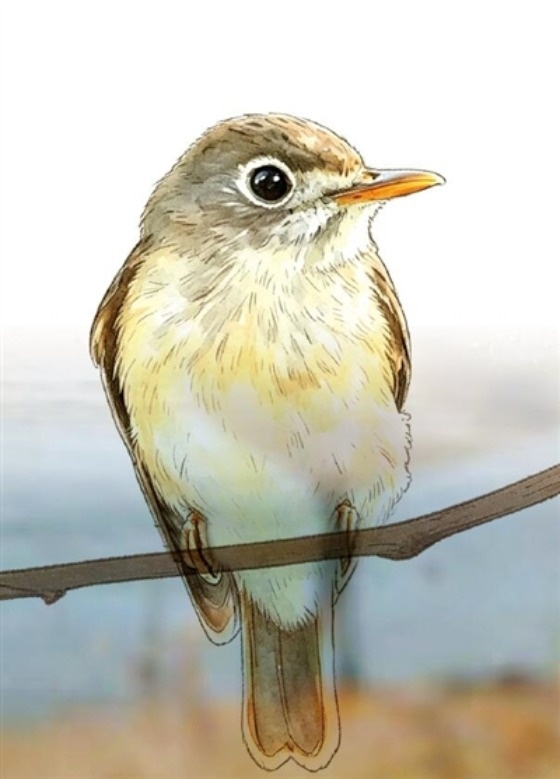
Brown-breasted flycatcher
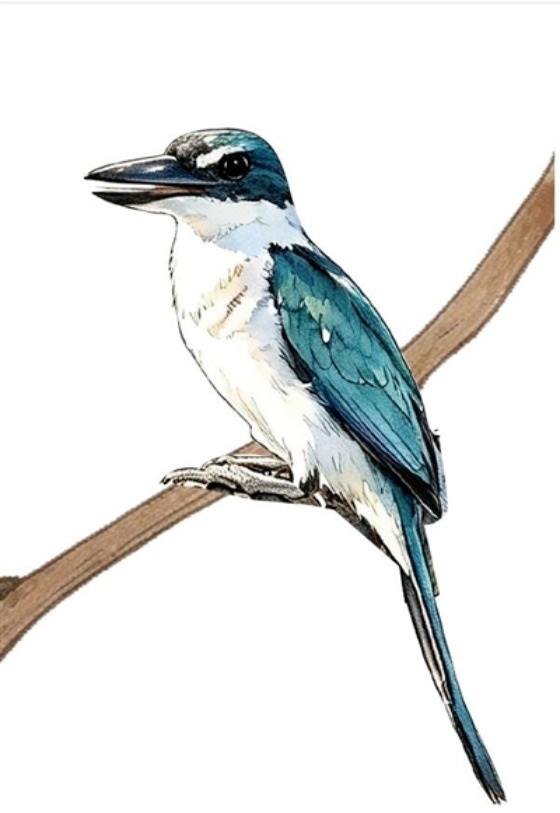
Collared kingfisher
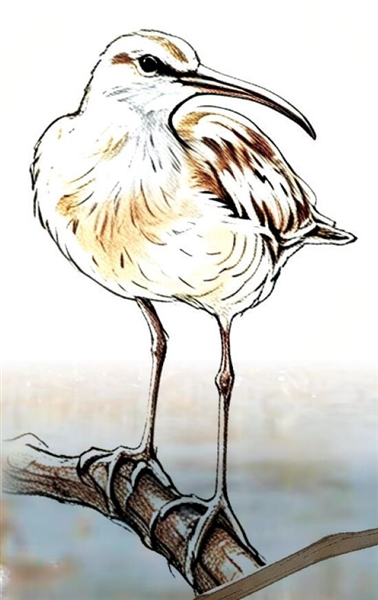
Whimbrel
During the migration season, flocks of birds of many species move through the trees. Shorebirds are another major group of migratory visitors, including black-winged stilts, recognizable by their long, bright-red legs. In December, Feng Erhui, a forestry engineer with the Dongzhai Port reserve's administration, recorded 400 to 500 black-winged stilts and more than 50 pied avocets at the Xiatang Waterbird Wetland Conservation Area. Shorebirds mainly inhabit tidal flats, feeding on small fish, shrimp, and other bottom-dwelling animals. Geese and ducks catch fish and shrimp at the surface or underwater. Lesser whistling-ducks dive for insects in the sediment and feed on small fish and shrimp at the surface. In October, flocks of migrating garganeys were recorded for the first time at Haikou Wuyuan River National Wetland Park. Feng said wild ducks, including garganeys, Eurasian teal, and northern pintails, are often among the first migratory birds to head south.
Herons are also common winter visitors to Hainan. In recent years, growing numbers of Eurasian spoonbills, a species under second-class national protection, have been seen on the island. Their long, straight bills are flattened and shaped like a pipa, a Chinese lute. They mainly inhabit the banks and shallow waters of rivers, lakes, and reservoirs, feeding on shrimp, crabs, aquatic insects, and small fish. They often arrive in Hainan for the winter alongside black-faced spoonbills, which are under first-class national protection. Purple herons, with their long bills, necks, and legs, stand still in shallow water, waiting to catch small fish that swim within reach.

A great egret in flight
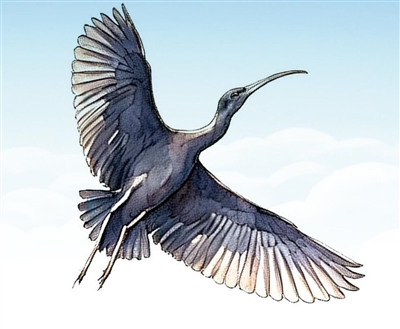
A glossy ibis in flight
Recent data show that more rare birds are wintering in Hainan, one of China's important wintering sites for black-faced spoonbills. These birds have long, flattened, spoon-shaped bills that also resemble a pipa. At Hainan Dongfang Black-faced Spoonbill Provincial Nature Reserve, the number recorded rose from 34 in 2015 to 48 in 2021 and 120 in 2025.
The spoon-billed sandpiper, a species under first-class national protection, measures about 15 centimeters long and has a flattened, spoon-shaped tip to its bill. Its global population is extremely small, and it is classified as critically endangered. Monitoring reports show that the species has wintered in Danzhou Bay for seven consecutive years. Along with black-faced spoonbills, Nordmann's greenshanks, great knots, and other critically endangered, endangered, or vulnerable species, it forms part of the bay's rare waterbird community.
The yellow-breasted bunting is listed as critically endangered on the International Union for Conservation of Nature (IUCN) Red List of Threatened Species. Its population plummeted as a result of illegal hunting. An earlier bird survey at Dongzhai Port recorded more than 80 buntings. The glossy ibis, a species under first-class national protection, was spotted at Dongzhai Port in 2024 and on Haikou's west coast in 2025. Hainan Changjiang Haiwei National Wetland Park recorded 13 glossy ibises in 2024, the highest count ever recorded in the province, and the species returned to the park in 2025. Other rare migratory birds, including Saunders's gulls, pale-capped pigeons, and greater white-fronted geese, have also been seen more frequently in Hainan in recent years.
Changes in the species and numbers of migratory birds reflect changes in Hainan's bird habitats. Lu Gang, director of the Haikou Duotan Wetland Research Institute, said conditions in the island's main waterbird habitats have continued to improve in recent years, thanks to ecological restoration projects such as returning coastal aquaculture ponds to wetlands and rehabilitating coastal areas.
Mangroves provide vital habitat and shelter for migratory birds. In recent years, Hainan has carried out targeted mangrove protection and restoration programs in coastal cities and counties including Haikou, Dongfang, Lingshui, Danzhou, and Changjiang. The Hainan Mangrove Resource Protection Plan (2024–2035) calls for restoring 1,000 hectares of mangroves through natural regeneration by the end of 2030 and maintaining the province's mangrove area at no less than 7,948 hectares.
More targeted management is also improving migratory bird habitats. At Xinying Mangrove National Wetland Park, for example, former aquaculture ponds have been converted into waterbird habitats. Sections of the embankments were removed to join the ponds into open stretches of water, leaving irregularly shaped islets in the middle. Sluice gates in the remaining embankments regulate water levels. At high tide, birds rest on the islets as seawater covers the tidal flats. When the tide recedes, exposed bottom-dwelling organisms provide food for waterbirds. In recent years, residents of villages near Hainan's wetlands have also begun organizing voluntary patrols to prevent habitat damage and illegal bird trapping.
作者: Translator: David Janke
责任编辑: 商赢兮
南海网版权声明:以上内容由南海网原创生产,未经书面许可,任何单位及个人不得以任何方式或理由对上述内容的任何部分进行使用、复制、修改、抄录、传播或与其它产品捆绑使用、销售。如需转载,请与南海网联系授权,凡侵犯本公司版权等知识产权的,本公司必依法追究其法律责任。电子邮箱:nhwglzx@163.com.